BRAES members are constantly conducting exciting and impactful work across all our research themes. Read on for a window into some of the novel topics our researchers are currently exploring.
Dr. Jen Baron, Assistant Professor in Fire Ecology
BRAES research themes: Ecosystem Processes, Soils, & Disturbance Recovery, Wildlife Ecology, Biodiversity, & Landscape Change

Dr. Jen Baron an Assistant Professor in Fire Ecology at the University of British Columbia Okanagan in the Centre for Wildfire Coexistence, where she directs the Fire Ecology and Management (FEM) Lab. Her applied research program focuses on the landscape ecology of fire, wildfire and ecosystem management, and ecocultural restoration. Through her research she works to understand how the ongoing legacies of colonial land management and climate change have altered wildfire regimes and ecological dynamics, and how the strategic applications of treatments and management can restore resilience in fire-adapted communities, ecosystems, and landscapes. In partnership with Ktunaxa communities, her collaborative research aims to support the revitalization and expansion of Ktunaxa stewardship practices and enable the re-introduction of beneficial fire to ecosystems. Dr. Baron has given over 40 media interviews and has translated her research widely to influence wildfire and forest management policy and practice. She is also an Associate Editor for Fire Ecology, which focuses on ecological and management aspects relating to wildland fire. Her research is informed by her prior experience as a consultant working with First Nations communities and organizations and conducting fire effects monitoring on prescribed fire operations.
For more information about Dr. Baron’s research please visit: Jen Baron
Dr. Greg Garrard: Social-Ecological Systems
 My research field is called ‘ecocriticism’, which is the literary branch of the ‘environmental humanities’, ‘a range of multifaceted scholarly approaches that understand environmental challenges as inextricable from social, cultural and human factors’ (Neimanis et al. 1970). While ‘the environment’ is often approached as if it were strictly the domain of natural scientists, it is important to distinguish between ‘problems in ecology’, which can only be addressed by ecological scientists, and the much wider category of ‘ecological problems’, which are ‘features of our society, arising out of our dealings with nature, from which we should like to free ourselves, and which we do not regard as inevitable consequences of what is good in that society’ (Passmore 1974). Cultural differences shape the ecological problems we identify, and also the kinds of solutions we propose and accept. For example, Germany is phasing out all its remaining nuclear power stations, whereas France gets 85% of its electricity from nuclear and has experienced little social protest on the subject. Similarly, Zhou’s analysis of data from 32 countries found that Canadians expressed the least environmental scepticism and Filipinos the most – but he also found no macropolitical differences that could explain the disparity, and concluded that the ‘variation may be due to unique historical and cultural contexts of individual countries, and cannot be simply attributed to national differences in affluence, world society connections, ecological conditions, and levels of democracy’ (Zhou 1973). Even the things we call ‘the environment’ – the very boundary-lines of ‘nature’ itself – are shaped by our cultural history. So my research, whether it’s on environmental literature, or novels about dogs or whales or chimps, or the phenomenon of climate scepticism, is about environmental imaginaries – which are not at all separate from the material realities studied by colleagues in the natural sciences.
Neimanis, Astrida, Cecilia Åsberg, and Johan Hedrén. “Four Problems, Four Directions for Environmental Humanities: Toward Critical Posthumanities for the Anthropocene.” Ethics & the Environment 20.1 (2015): 67-97. Print.
Passmore, John Arthur. Man’s Responsibility for Nature; Ecological Problems and Western Traditions. London: Duckworth, 1974. Print.
Zhou, Min. “Public Environmental Skepticism: A Cross-National and Multilevel Analysis.” International Sociology 30.1 (2015): 61-85. Print.
For more information about Dr. Garrard please click here.
Dr. Miranda Hart: Biodiversity & Ecological Interactions, Landscape & Natural Resource Management
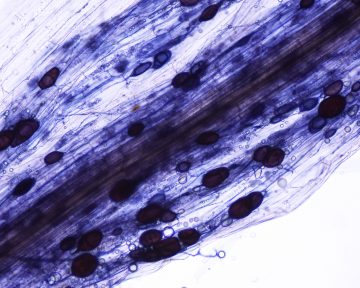 I am a soil microbial ecologist who is interested in how soil microbes can be used to promote sustainable land use. My primary focus is on arbuscular mycorrhizal communities”. I have several projects looking at the efficacy and fate of commercial inoculum in agricultural systems, both grain agriculture and viticulture. Plus, we are looking at how soil biology can maximize restoration success post mining. We are also trying to understand how humans have changed soil biota – if there are any ‘wild’ soils left, and if so, how they differ from disturbed soils.
For more information about Dr. Hart please click here.